
Dog Training Collars & Harnesses
Control and handling for training days
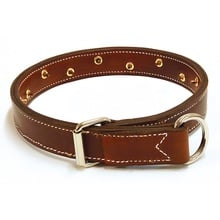
On training days when a dog is amped up and pulling hard, dog training collars and harnesses give you clean control without turning every session into a wrestling match. You reach for them when you’re roading a dog, walking to the line, or tightening up obedience around the kennel and truck. Leather leads and properly fitted harnesses help you keep consistent pressure and clear direction from the first step. Pick the style that matches the job—handling in close, steadying on lead, or conditioning work where fit and adjustment matter.
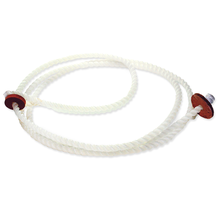
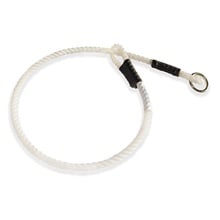
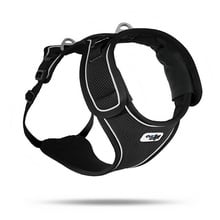
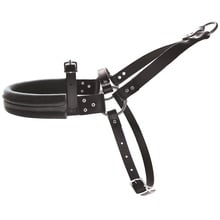

Choosing the right collar or harness
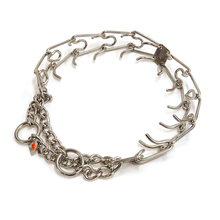
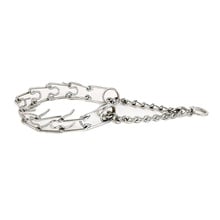
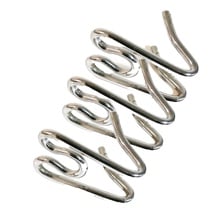
A lead-and-collar setup is usually the quickest way to handle a dog in tight quarters, while a roading harness spreads pull across the body for conditioning work. A prong collar changes how pressure is applied, so fit, link size, and placement high on the neck matter as much as leash handling. A spiked training dog collar adds a different kind of correction for specific training situations, but it still needs a steady hand and clean timing. For any option, measure carefully and check for rubbing points before you put miles on a dog.
Training collar and harness FAQs
What’s the difference between a roading harness and a training collar?
A roading harness manages pulling during conditioning by distributing force across the dog’s body. A dog training collar applies pressure at the neck for handling, control, and correction during obedience work.
When would I use a prong collar instead of a flat training collar?
A prong collar is used when you need clearer feedback with less leash force than a standard collar. A prong collar still requires correct fit and placement high on the neck to keep pressure consistent and safe.
How do I size a prong collar correctly?
A prong collar should fit snug high on the neck without sliding down toward the shoulders. A prong collar that hangs low or is too loose tends to give uneven pressure and can create handling problems.
What is a no hurt dog training collar used for?
A no hurt dog training collar is used to apply correction without sharp points while keeping pressure clear and consistent. A no hurt dog training collar is often chosen when you want a training collar style action but with a smoother contact surface.
When should I use a dog roading harness?
A dog roading harness is used for conditioning work where the dog is pulling into steady resistance. A dog roading harness helps keep the pull off the neck during roading sessions and longer workouts.
What should I use to road my dog safely?
A roading harness is the right tool to road a dog because it carries the load on the body instead of the neck. A roading harness should be adjusted so it stays put without rubbing when the dog is moving out.